Local SEO for locksmiths is how your business shows up when someone nearby is standing outside a locked car or house and searches Google for help. When a driver types 'car lockout near me' or a homeowner types '24 hour locksmith,' you want to appear in the map results and on page one, because in an emergency almost nobody scrolls past the first few listings. There is one honest thing you need to know up front: Google watches the locksmith category more closely than almost any other trade, because it has been flooded with fake and lead-broker listings for years. That is actually good news for a real, local locksmith. This guide shows you how to build genuine signals that Google trusts and turn urgent searches into booked jobs.
What local SEO for locksmiths really means
Local SEO simply means showing up in Google's local results - the map with the pins near the top, plus the business listings beneath it. It is different from regular SEO because Google tries to match each searcher with businesses close to them, and for locksmiths it also tries hard to weed out the fakes. Your work is mostly emergency and urgent: residential and auto lockouts, rekeying after a move or a breakup, lock installs, key duplication, smart locks, and safe work. If you want the full foundation first, our guide to local SEO for service businesses covers the basics that apply to every trade, and this article stacks locksmith-specific moves on top.
Start with a real, verified Google Business Profile
Your Google Business Profile is the free listing that decides whether you appear on the map at all, and for a locksmith it is the single most important thing you control. Be ready for this: Google often requires extra verification for locksmiths, sometimes a video walkthrough of your workspace and vehicle, sometimes more than one method. That step frustrates a lot of owners, but it is exactly what protects a legitimate locksmith from the fakes. Set everything up honestly the first time. Our complete Google Business Profile guide walks through every field, and a few settings matter more for locksmiths than anything else.
Handle your address and service area honestly
If you work out of a van and travel to customers, you are a service-area business: hide your street address and list the towns and zip codes you actually serve. Do not invent an address in a city where you have no real presence, and never use a virtual office or a mailbox as a fake storefront. This is precisely the behavior Google hunts for in this category, and keyword-stuffed names or fake locations get suspended fast. Use your real business name, pick 'Locksmith' as your primary category, and add only services you truly offer.
- Every service you offer: residential and auto lockouts, rekeying, lock installation, key duplication, smart-lock setup, and safe opening
- Real hours, and mark 24/7 emergency service clearly if you actually run it
- A local phone number you answer, plus a direct link to your services page
- An honest business name with no stuffed keywords, and a real address handled correctly
In the locksmith category a genuine, fully verified profile beats every trick - Google suspends fake names and fake addresses faster here than almost anywhere else.
Your service area
- Midtown
- Westgate
- Oakdale
- Riverside
Gold tiles are where you rank #1. Watch them spread as you climb.
Rank for urgent lockout searches
Locksmith searches are different from most trades because they are driven by stress and speed. Someone locked out of their car in a parking lot is not comparing five quotes; they want the closest business that answers now. Google's map results, often called the local map pack or 3-pack, lean heavily toward businesses near the searcher, which is why you will rank strongest closest to your real base and can extend outward with honest signals. If you have set everything up right but still are not appearing, our guide on why you are not showing up on Google Maps walks through the usual culprits, several of which hit this category hard.
Build honest signals for each area you cover
You cannot fake your way into every town, and in this category trying will get you flagged. What works is genuine proof that you serve an area: real jobs completed there, reviews from customers who name their city, and a useful page on your site for each area you actually cover. Name the neighborhoods, mention common needs like rekeying a newly bought home or replacing a worn deadbolt, and keep each page specific rather than a copy-paste with the town swapped out. A handful of honest, detailed area pages will always beat a pile of thin ones.
- Real jobs completed in an area, posted as dated photos on your profile
- Reviews that mention the town by name because you asked the customer to include their city
- An area page with specific local detail instead of a duplicated template
- Consistent mentions of your business on local directories and community sites
Get a review after every job
Reviews are the strongest trust signal a locksmith has, and you are sitting on a goldmine most trades envy: relief. A customer you just freed from a locked car or a house they could not get into is genuinely grateful, and that is the perfect moment to ask. Do it on the spot, while they are thanking you, and text them a direct review link so it takes one tap. Emergency customers who feel rescued write some of the warmest reviews you will ever get. Our guide on how to get more Google reviews gives you word-for-word scripts you can use.
- Ask in person the moment the job is done and the customer is relieved, then text a one-tap review link
- Reply to every review within a day or two, the glowing ones and the tough ones alike
- Never buy or fake reviews, because Google scrutinizes this category and a suspicious flood can get you flagged or suspended
Use photos and Google posts
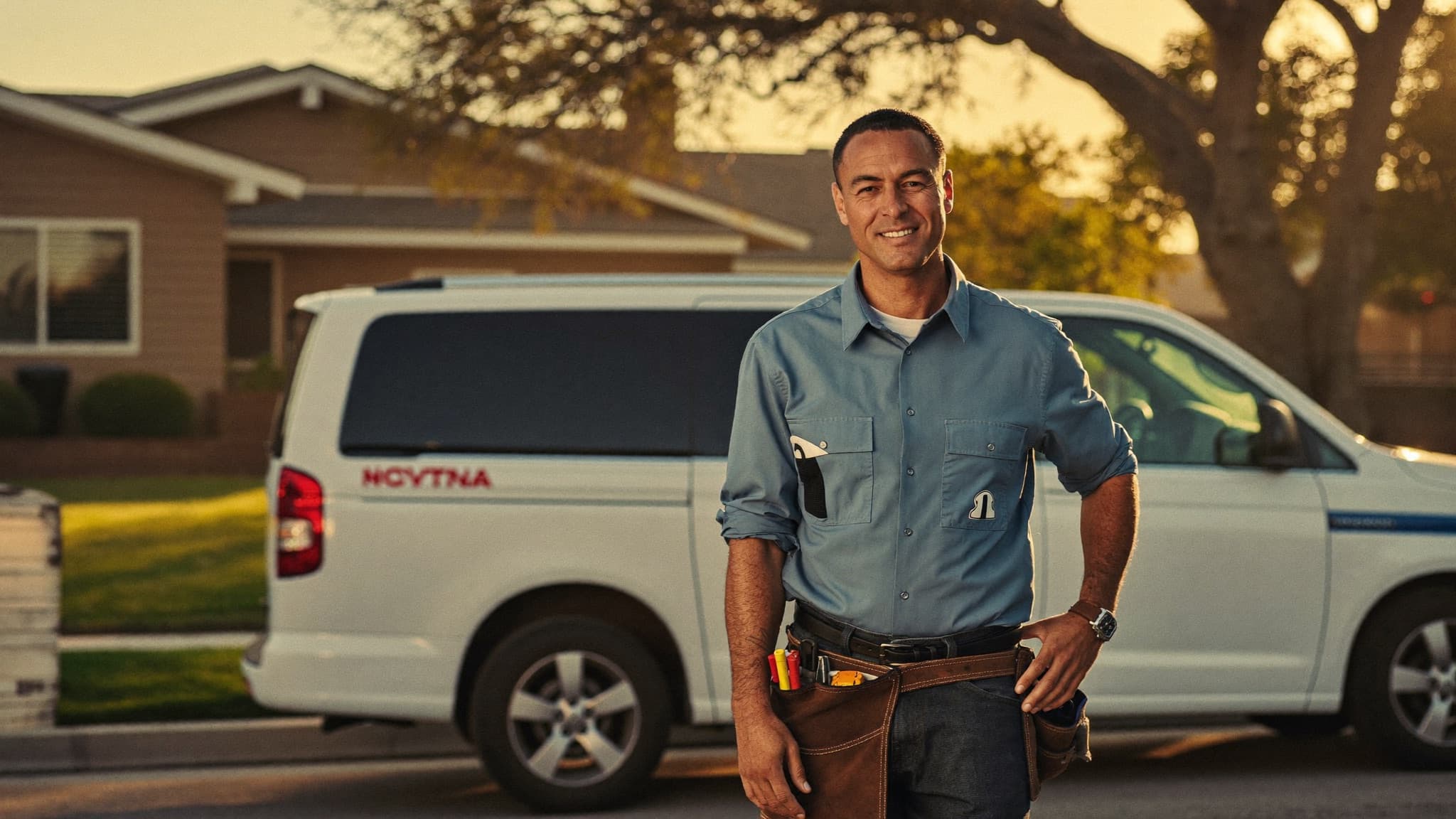
Google rewards businesses that add fresh photos, and a real locksmith has plenty to show: your marked van, your workspace, a new smart lock installed on a front door, a rekeyed cylinder, a safe you opened. These images do double duty here, because they also quietly prove to a wary searcher that you are a real local business and not a call-center listing. Upload photos on a regular basis rather than once at setup, and caption them with the town so every area you serve keeps getting fresh, relevant images tied to real work.
Posts that match locksmith moments
Google Posts are short updates that appear right on your profile, and they keep it active, which Google reads as a healthy, working business. For a locksmith they also reach people at the moment they are thinking about locks. Post about rekeying after a move, upgrading to smart locks, checking on worn deadbolts before winter, or a reminder that you answer lockout calls around the clock. You do not need a storm to have something to say; the calendar and everyday life give you plenty of honest hooks.
- Moving season: 'Just bought a home? Rekey every lock so old keys stop working.'
- Upgrades: smart-lock and keypad installs for people tired of hiding a spare key
- Reassurance: a plain note that you answer 24/7 lockout calls for cars and homes
- Everyday: key duplication, mailbox locks, and worn-deadbolt replacements
Fresh photos and steady posts tell Google your locksmith business is active and real - and in a category full of fakes, looking genuinely local is a ranking advantage.
Get listed on the directories that matter
Google trusts a locksmith more when it sees the same details about you in many honest places. Those mentions are called citations: your business name, phone number, and service area listed on trusted sites. The one rule that matters most is consistency - your name, phone, and areas should match everywhere, letter for letter, because even a small mismatch can confuse Google and cost you rank. It matters double here, because inconsistent or spammy citations are one of the patterns Google uses to spot fake locksmith listings.
- General: Yelp, Bing Places, Apple Maps, and Facebook
- Trade and trust: the Better Business Bureau, and, if you hold one, your state locksmith license listing
- Local: your city's chamber of commerce and neighborhood business listings
Answer the phone fast, because intent is urgent
For most trades a slow callback is survivable. For a locksmith it is fatal, because the person searching is locked out right now and will call the next business on the list within a minute. The locksmith who answers first usually wins the job. Put a click-to-call button front and center, answer live whenever you can, and if you cannot, use a service or a person who answers for you so no lockout call goes to voicemail. Ranking gets you found, but a fast, human answer is what turns that visibility into a booked job. It becomes a loop: rank, get found, answer instantly, do great work, earn the review, and rank even higher.
Where Glowmark fits
Everything above works, but it is a lot to stay on top of when your days and nights are spent on lockout calls. That is the gap Glowmark fills. It runs your Google Business Profile on autopilot - regular posts, review replies, fresh-photo prompts, seasonal reminders, and rank tracking across every area you serve - then sends you a plain-English monthly Glow Report so you can see what is moving. You can see exactly how Glowmark works from start to finish. Or if you just want to know where you stand today, run a free Glow Check for a quick read on your locksmith business's Google visibility, with no jargon and no commitment.